The Crackdown on Student Protests in Bangladesh: A Legal and Constitutional Crisis Unfolds
By: Abdullah Al Noman, Lawyer, Supreme Court of Bangladesh.
The recent wave of student protests in Bangladesh met with a brutal crackdown by the government, has exposed a profoundly concerning disregard for the nation’s Constitution and international human rights law. The arbitrary arrests, detentions without charge, and alleged torture of students represent not just a political crisis but a fundamental breakdown of the rule of law.
This analysis delves into the legality of the mass arrests and detentions, meticulously examining the violations of the Constitution and international human rights law.
The Crushing of Dissent: Violations of the Right to Peaceful Assembly
· Article 37 of the Constitution of Bangladesh guarantees the right to freedom of assembly and association. While this right is not absolute, any limitations must be demonstrably justified by law and necessary in a democratic society. Such limitations must also be proportionate to a legitimate aim, such as protecting public order or national security.
· The government’s actions paint a picture of disproportionate and indiscriminate force. The protests were overwhelmingly peaceful, primarily centered around demands for a fairer quota system in government jobs. The mass arrests, often conducted without individual suspicion or justification, strongly suggest an intent to silence dissent rather than maintain order.
Arbitrary Detention and the Erosion of Due Process
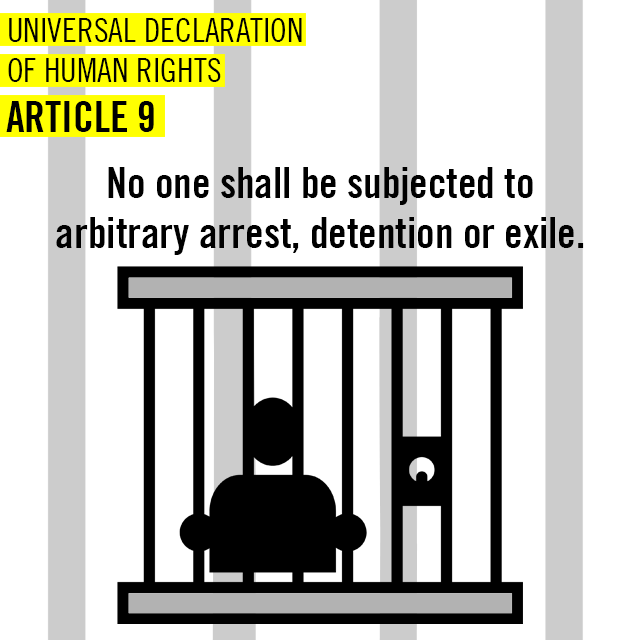
· Article 33 of the Constitution unequivocally guarantees the right to life and personal liberty. This right is fundamentally undermined when individuals are deprived of liberty without lawful authority and due process.
· The arrests in question appear to be systematically flawed. Many students were detained without warrants, a blatant violation of their fundamental rights. Even in cases where formal arrests were made, charges were often not communicated, and access to legal counsel was routinely denied, further compounding the violation of Article 31 of the Constitution. This pattern of arbitrary detention without proper legal basis points to a deliberate disregard for the rule of law.
Beyond Arrests: A Muzzling of Free Speech
· The right to freedom of expression, enshrined in Article 39, is not merely the freedom to speak; it is the freedom to hold opinions and to receive and impart information. The student protests exercised this right at their core, a collective expression of dissent against perceived injustices.
· By responding with force and intimidation, the government has effectively silenced a critical voice in a democratic society. This chilling effect on free speech extends far beyond the immediate protests, setting a dangerous precedent for future civic engagement and dissent.
As a signatory to the International Covenant on Civil and Political Rights, Bangladesh has committed to upholding the rights to freedom of assembly, association, and liberty and security of person. The recent crackdown on student protests represents a clear breach of these international obligations, further tarnishing the country’s human rights record.
Violation of the Right to Peaceful Assembly under the ICCPR
· Article 21 of the International Covenant on Civil and Political Rights, ratified by Bangladesh in 2000, explicitly recognizes the right of peaceful assembly. While this right is not absolute, any restrictions must be:
Prescribed by law: The government must demonstrate a clear legal basis for any limitations on assembly, which must be accessible and foreseeable.
Necessary in a democratic society: Restrictions must be demonstrably necessary to achieve a legitimate aim, such as protecting national security, public safety, public order, public health or morals, or the rights and freedoms of others.
Proportionate: Any limitations must be proportionate to the aim pursued and not go beyond what is strictly necessary.